Production
Lighting Interviews Without Losing Authenticity
Good lighting should support the subject and the environment without making an honest conversation feel staged. After years of filming interviews in living rooms, offices, and community spaces, I've come to think of lighting less as something I impose on a room and more as something I negotiate with it.
- Published
- Reading time
- 5 min read
- Author
- Leomar Moring
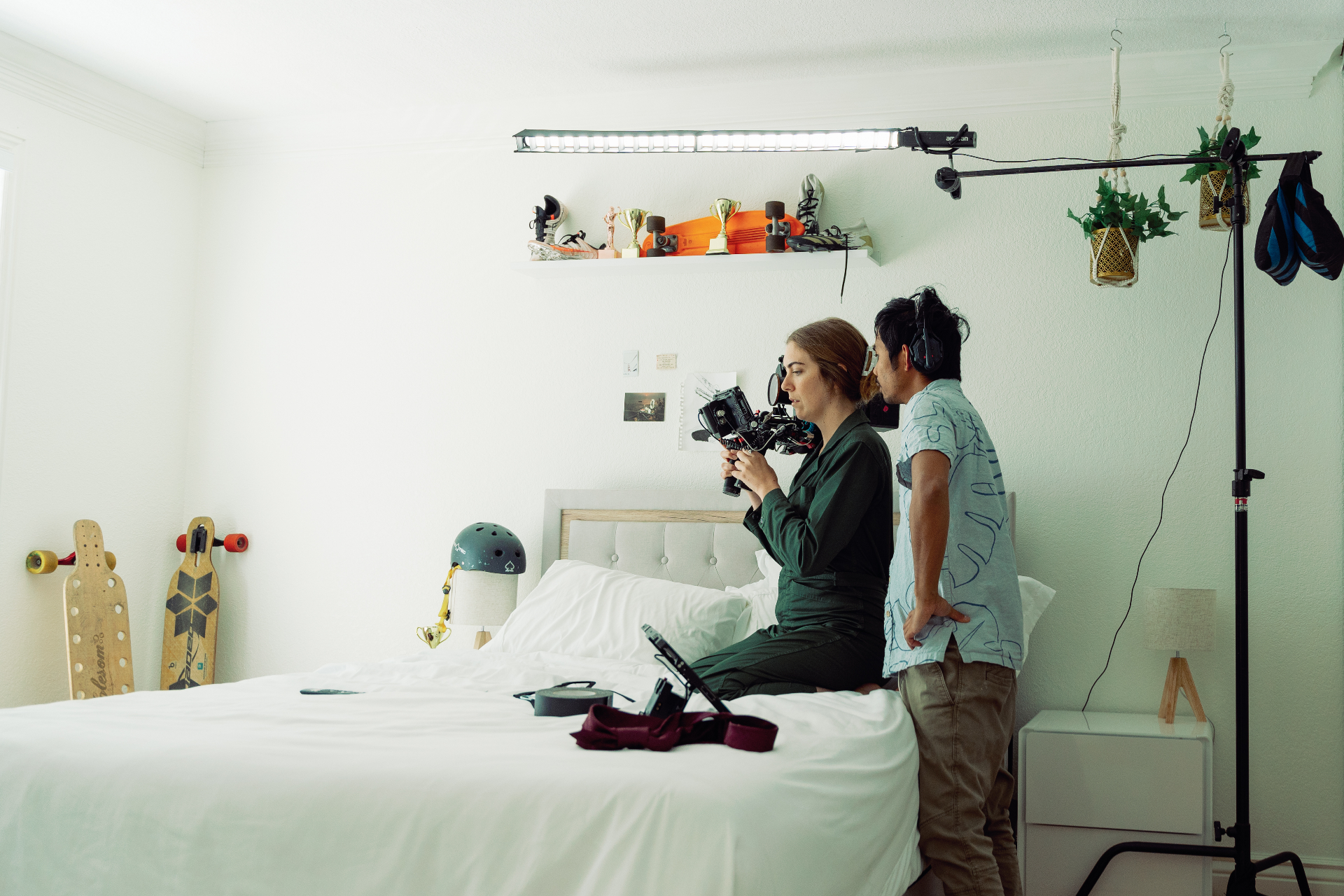
The first lighting decision I make on an interview day isn't about lights at all — it's about paying attention to the room before I touch anything. Where does the window sit? What's already turned on? Where does the subject naturally like to sit? A person's own room already knows how to light them; the sun has been doing it every afternoon for years. My job is to decide whether what the room gives me serves the conversation, and to add just enough to fill the gaps.
Start with what the room already gives you
I almost always begin with the practicals — the lamps, window light, and overhead fixtures that belong to the space. Practical light keeps the background believable: the room in the frame looks like the room the person actually lives and works in, not a set dressed to imitate one. When I film interviews in bedrooms, kitchens, or break rooms, the strongest images usually come from positioning the subject so a window or an existing lamp does most of the work, then adding a single soft source to lift the shadows on the face. That one added light, kept gentle and close to the color of the room, is often the only thing the shot needs.
This isn't just an aesthetic preference. A subject who looks like themselves — in a room that looks like theirs — settles in faster and speaks more naturally. The moment the environment stops matching the person, the interview starts to feel like a performance of the person.
The news-studio look, and why I avoid it
There's a look I think of as the default news-studio setup: a perfectly balanced key, fill, and backlight, the subject evenly lit from every angle, the background gently but completely separated. It's technically accomplished, and for some projects it's exactly right. But in documentary and mission-driven work, it carries a tone the conversation hasn't earned. Over-lit interviews read as broadcast — polished, official, slightly distanced — and people answer questions the way that look trains them to: carefully, formally, in soundbites.
The same setup also flattens what makes a face interesting. Real rooms have direction and contrast; a window falls off across someone's cheek, a lamp warms one side of the frame. When I light away all of that, I'm editing out the texture of the person along with the flaws. A slightly imperfect, natural-looking interview is almost always more honest than a perfectly sculpted one — that conviction shapes everything from where I put the chair to how much light I'm willing to leave alone.
“If the light makes a living room feel like a television set, the answers start sounding like they were given on one.”
When added light earns its place
None of this means I show up with nothing. Available light alone fails in predictable ways: a bright window behind the subject turns them into a silhouette, midday sun rakes harsh shadows across a face, and dim rooms drop the eye light that makes someone look present rather than tired. That's when added light earns its place — not to redesign the room, but to restore clarity the room can't provide on its own.
In practice that means a small, soft, diffused source placed close, motivated to feel like it could belong to the room. I'm balancing two things at once: the interview needs to be clean and legible — a nonprofit or public agency is going to live with this footage for years, and muddy faces don't age well — while the environment stays recognizable as itself. If I can't tell from the monitor whether the light came from the window or from me, I've usually gotten the balance right.
Working fast in rooms I don't control
Most interview locations aren't scouted in advance, and the person in the chair has somewhere to be. So the lighting approach has to work in minutes, not hours: one soft key, a reflector or small bounce for fill, and the discipline to walk into a room and make a decision rather than experiment. Lean setups help here too — the fewer cases come through the door, the more the room stays a home instead of becoming a location.
The constraint is a feature. When you can't rebuild the space, you light the person as they actually exist in it, and the footage keeps the honesty of the place along with the words.
What the light is protecting
In the end, lighting an interview is the same job as everything else around a documentary interview: making the conditions disappear so the person can just talk. The audience should remember what was said and who said it — not the rig that made it look good. If the footage feels like a conversation that happened in a real place, the light did its job, whether or not anyone notices it at all.
Related notes
Interviews
How I Help People Feel Comfortable on Camera
· 5 min read
Trust begins before the interview. A thoughtful production environment can help people feel prepared, respected, and able to speak naturally.
Strategy
Why Story Strategy Comes Before Production
· 5 min read
A camera can't fix an unclear message — why the strategy conversation has to happen before anyone books a shoot day.
Production
Before the Cannon Fires
· 4 min read
Planning photo and video coverage for a 12-hour adventure race with no fixed route — and the logistics puzzle of catching a cannon that only fires once.
Planning interviews in real, imperfect locations?
If you're producing an interview-driven film and want subjects who look like themselves — in rooms that look like theirs — I'd be glad to talk through how I'd approach your project.