Strategy
Why Story Strategy Comes Before Production
A camera can't fix an unclear message. You can hire the best cinematographer in the Bay Area, rent every light in the truck, and still end up with a video that doesn't perform — if nobody agreed on what it was supposed to accomplish before production started.
- Published
- Reading time
- 5 min read
- Author
- Leomar Moring
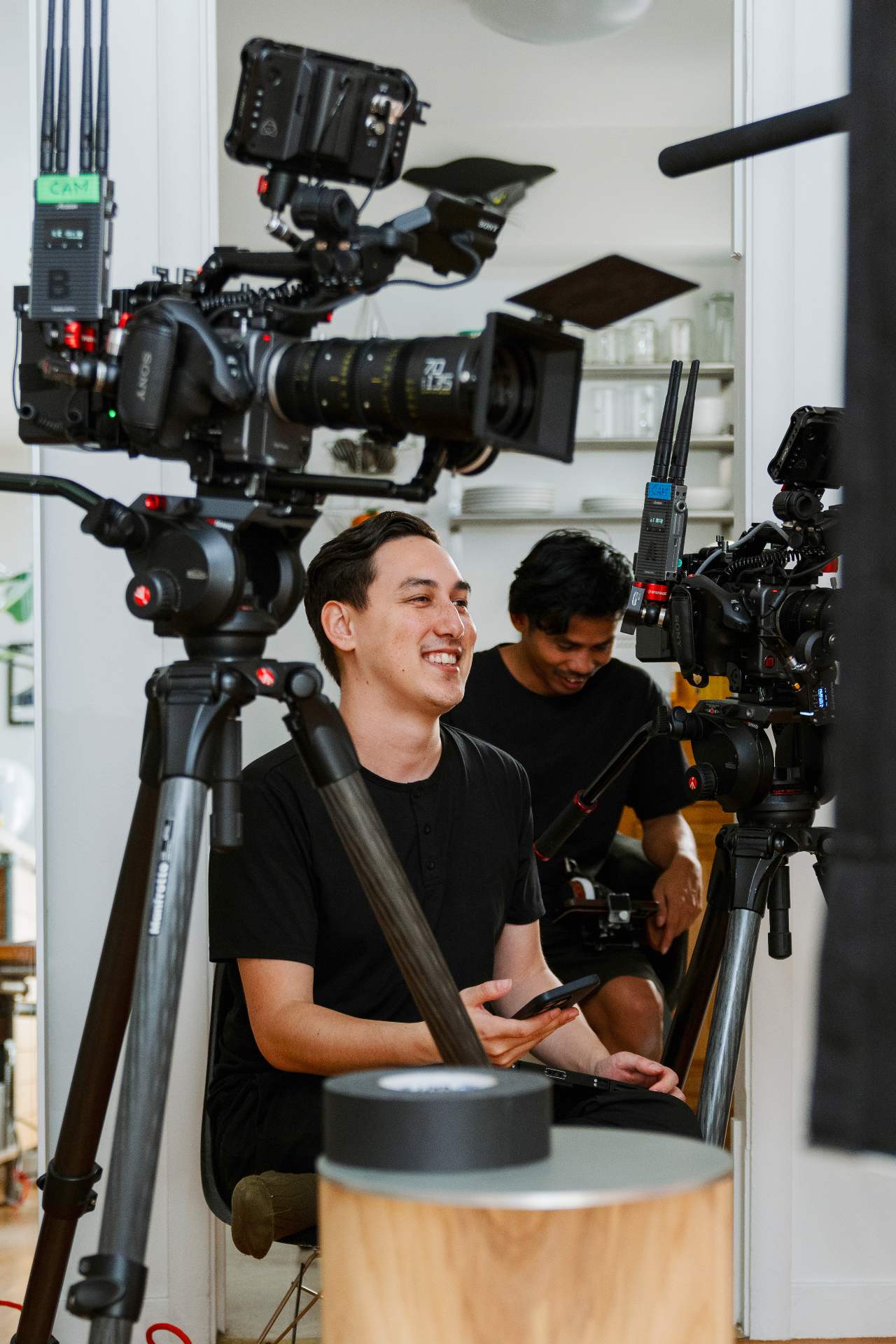
I've worked with Vite Ramen for almost six years now, and Tim Zheng — the company's co-founder — taught me something early on that changed how I think about production.
Tim comes to a project with a strong idea, usually already written out. What he's less focused on is how that idea actually translates into a working shoot sequence — that's not his background, and it's not supposed to be. My job is to take what he's communicating and figure out how it becomes something filmable. Vite Ramen's audience isn't the type that responds to a polished, "cinematic" look — the brand speaks to gamers, college students, people who think of food as fuel and don't have time to sit down for a meal. Tim has always been direct about this: the idea has to be good first. Visual polish is secondary.
That ran against how I was trained. Early in my career, my instinct as a DP was to make everything look as good as possible, almost regardless of what the underlying idea was — that was the job as I understood it. Working with Tim over the years pushed back on that. I learned that sometimes the idea matters more than the visual, and that a technically beautiful shot in service of an unclear idea still doesn't work.
A camera can't fix an unclear message
You can hire the best cinematographer in the Bay Area, rent every light in the truck, and still end up with a video that doesn't perform — if nobody agreed on what it was supposed to accomplish before production started. Beautiful footage of the wrong idea is still the wrong idea. This is part of why, on every project now, the first conversation I have isn't about gear or shot lists. It's about what the idea actually is and who it's for.
The three questions that come before "what should we shoot"
Who is this actually for? Vite Ramen's audience isn't "the public" — it's gamers and college students who think about food differently than a typical food brand's customer. Knowing that shapes everything downstream, long before a camera comes out.
What do we need them to do afterward? Every project needs a clear answer to this, in one sentence. If nobody can answer it, the video doesn't have a job yet.
Where will this actually live? A quick social piece and a longer brand story aren't the same project scaled differently — they're different projects with different pacing and different editing logic.
Staying flexible when the idea is still evolving
Working with Tim also taught me to expect the plan to change mid-shoot. He'll sometimes shift direction while we're filming, because he's already thinking ahead to something bigger than what's in front of us in the moment. Six years in, I've learned to trust that instinct and adjust in real time rather than insisting on the original plan — which is its own kind of strategy conversation, just one that keeps happening throughout the shoot instead of only at the start. It's also worth noting Tim edits his own content, with support from a VFX artist — so the production side is only ever one part of how the final piece comes together.
Strategy doesn't have to slow things down
The instinct is that a strategy conversation adds time nobody has. In practice, it saves time — because it's much faster to align on the idea up front than to reshoot, re-edit, or quietly shelve a video that doesn't land. An hour of the right questions before production almost always costs less than a week of the wrong footage after.
Related notes
Strategy
Nonprofit Video Production Budgeting & Pricing Tiers
A transparent guide to how nonprofit video production is priced — the variables that move a budget, and the common tiers mission-driven organizations should plan around.
Strategy
How to Write a Video Production Brief Your Nonprofit's Board Will Approve
A practical guide for nonprofit and public agency communications teams on writing a video production brief that gets board or leadership sign-off.
Let's talk through the idea before the shot list.
If you're scoping a video project and want to talk through the idea and strategy before you talk through the shot list, that's exactly the conversation I like having first — reach out any time.