About Leomar Moring
I've been fascinated by people's stories since I was a kid. Growing up in the Philippines, I spent hours watching travel shows and documentaries — even things like Ancient Aliens taught me something about how a documentary holds an audience: how to listen, how to build a question, how to let someone else's story carry the weight of the piece.
I moved to the U.S. at 12. A few years later, at 15, I found Parkour through YouTube videos, and it became the thing I was most drawn to as a teenager. I started filming myself training and documenting my own progression — not because I thought I was becoming a filmmaker, but because I wanted to see how I was improving. Looking back, that was the actual first step into this career, even though I didn't know it at the time.
Ten Years of Trial and Error.
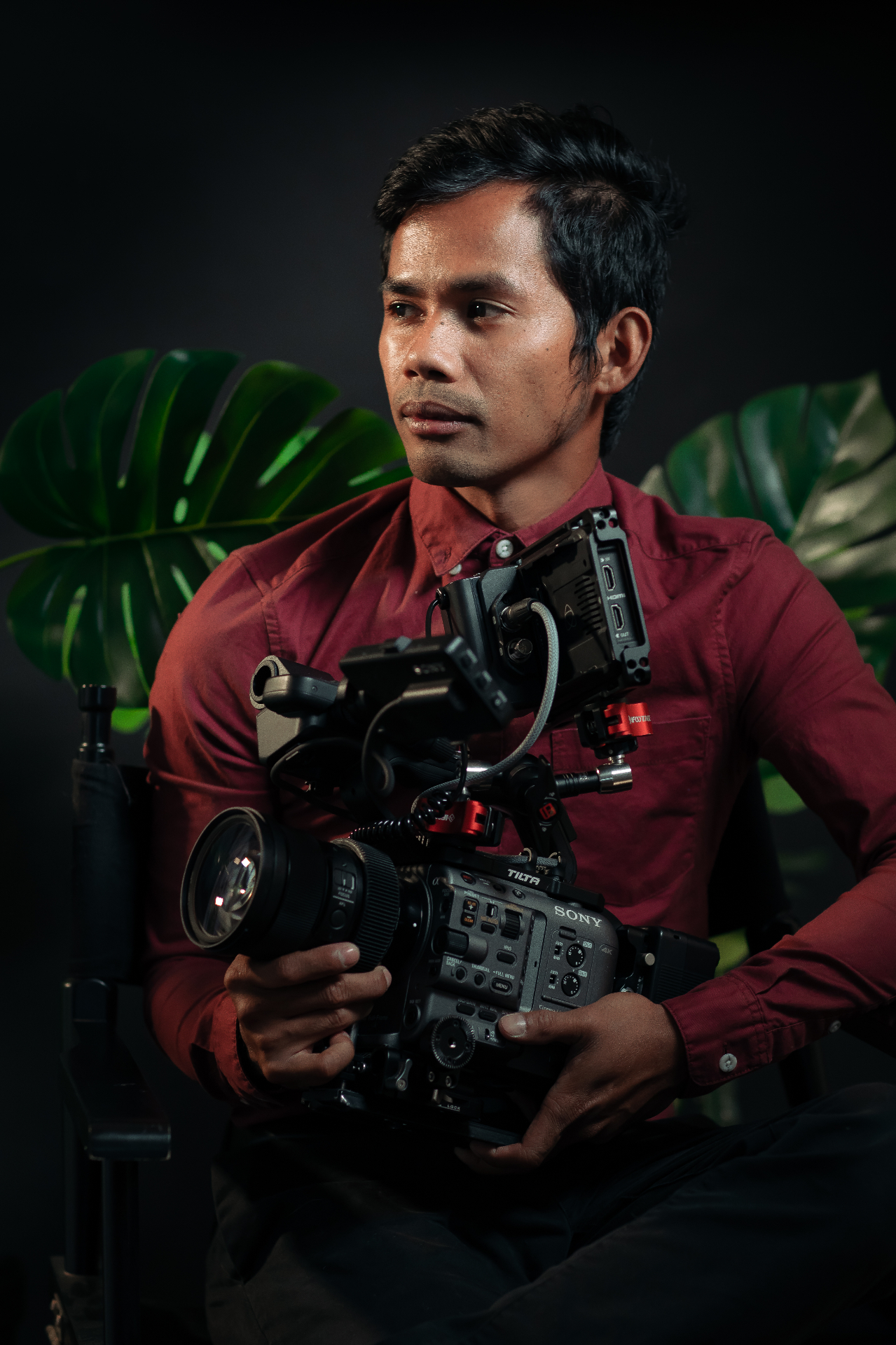
For the next ten years, I taught myself filmmaking almost entirely through trial and error — filming Parkour, then travel and adventure videos, learning everything through YouTube and just doing it repeatedly until it worked.
I never went to a formal film program for this part of my journey, and I've come to see that as a strength rather than a gap: everything I learned, I learned because it had to work, not because it was in a textbook.
From Cold Emails to Eleven-Year Collaborations.
Eventually I looked up how to actually make money with a camera, and weddings were at the top of the list. I emailed five wedding videography companies in the Bay Area. Two responded — one of them was Casey Peek's company. That relationship is still going, almost eleven years later.
It took about eight years of steady work before I was able to go full-time as a video producer, and the first year of doing this full-time was genuinely hard. But that slow build is exactly what turned into the deeper trust I now have with long-term clients like Casey — trust that eventually led to him bringing me on as Director of Photography for his documentary work, including Ancestry on Trial, after years of him knowing exactly what I'm capable of behind the camera.
Organizations telling stories that matter.
- Public agencies
- Nonprofits
- Advocacy organizations
- Educational institutions
- Documentary producers
- Corporate communications teams
- Campaign organizations
- Community groups
- Mission-driven companies
- Creative agencies
That range of work happens across San Francisco, Oakland, and the wider Bay Area — though a good story is worth traveling for, wherever it leads.
Listening Closely Enough to Find the True Story.
Today, that same curiosity that had me watching documentaries as a kid in the Philippines is what drives every project I take on — whether it's a nonprofit fundraising film, a public agency communications piece, or a feature documentary. I studied Film, Television & Electronic Media at Diablo Valley College along the way, but the real foundation of how I work came from a decade of figuring it out myself, one shoot at a time.
I still believe the most important part of this work isn't the camera — it's listening closely enough to understand which story is actually true, and having the patience and technical craft to tell it well.
A career shaped across storytelling, production, and public communication.
Dates omitted where not confirmed.
Independent Video Producer and Digital Storyteller
Director of Photography
Ancestry on Trial
In production
Media Director
Vite Ramen
Video Producer / Media Specialist
California Transit Works! (CTW)
Film, Television & Electronic Media
Diablo Valley College
Let's create something people remember.
Whether you're documenting history, producing a documentary, launching a campaign, or communicating with your community, I'd like to hear about your project.