Interviews
How I Help People Feel Comfortable on Camera
Trust begins before the interview. After years of filming interviews for nonprofits, public agencies, and documentary projects, the part of the process that makes the biggest difference is almost always what happens before the camera starts recording.
- Published
- Reading time
- 5 min read
- Author
- Leomar Moring
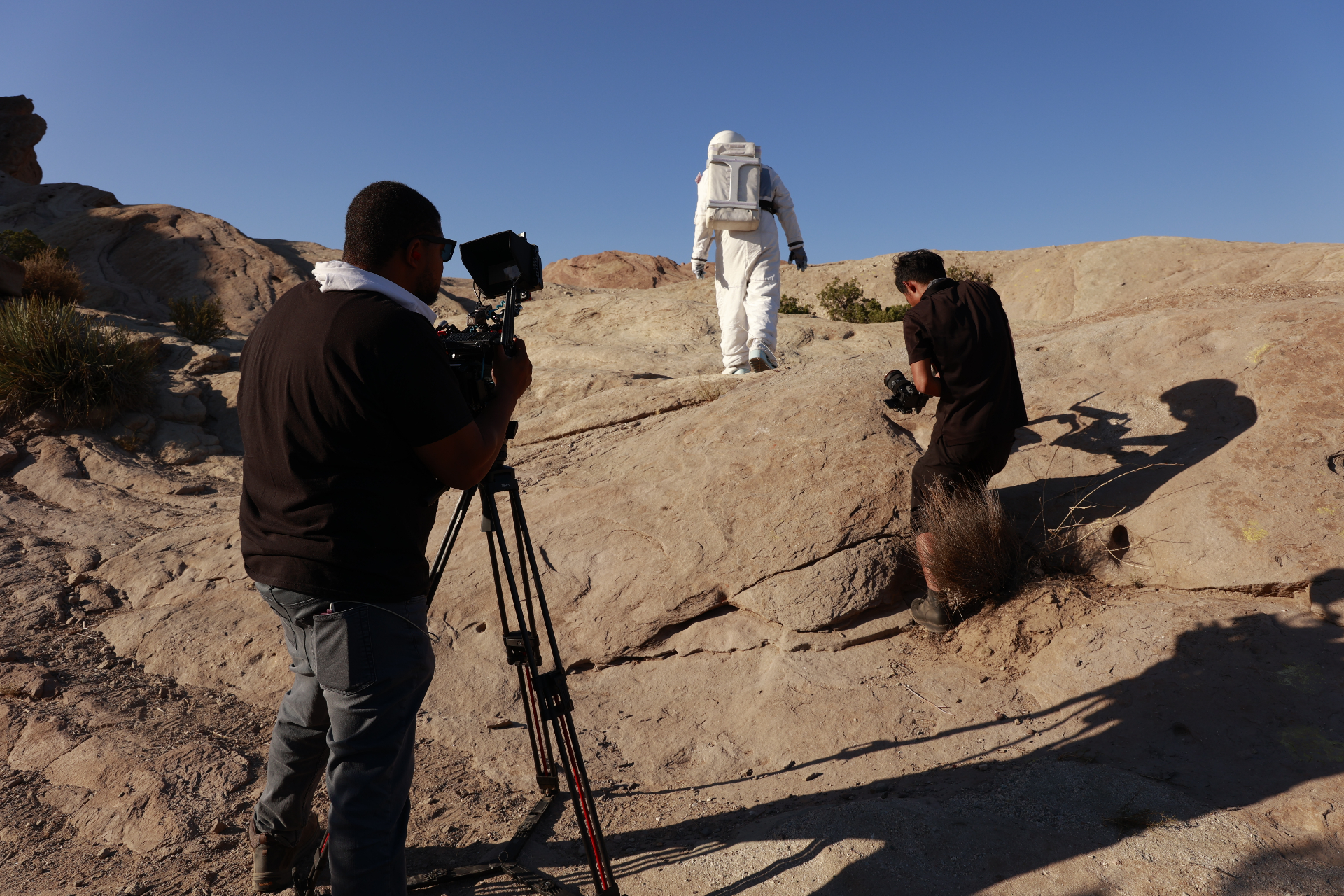
The room itself is part of the conversation. I try to set up in a space where the subject can forget the camera is there — or at least stop thinking of it as the main thing in the room. That usually means a quiet corner with a door that closes, a chair that feels familiar, and enough distance from foot traffic that no one has to stop mid-sentence. When I've filmed for California Transit Works! through my collaborator Casey Peek, the best interviews have happened in a break room or office where a mechanic or operator can talk without coworkers wandering through. On Ancestry on Trial, the quietest moments often came from letting the subject sit where they already sit, rather than dragging them into a more 'professional' setup that doesn't belong to them.
A small crew is a quieter room
I prefer to work with a lean documentary setup — just a DP and a sound person when possible — because every extra body in the room makes the subject feel more observed. If a client or producer needs to be present, I usually position them behind the camera so the subject only sees one person asking questions and one person behind the lens. The less the subject has to perform for, the more likely they are to stop performing.
The pre-interview conversation is part of the interview
I try to have a real conversation before the formal interview starts. I'll explain how the day will go, what kinds of questions I'll ask, and what I need from them in simple terms. I also make it clear that there are no gotcha questions — if they don't want to answer something, they can say so. That conversation usually bleeds into small talk about their commute, their work, or whatever was happening before I arrived. The first five minutes on camera are rarely the answers I use, but they're often the five minutes that let the subject decide this is safe.
No one should be surprised by a question
Ideally, I do a short pre-interview call a few days before the shoot. We walk through the topics, not the exact wording, so nothing catches them off guard. They can think about what they want to say, bring notes if that helps, and ask questions about wardrobe, accessibility, or whether a family member should be nearby. For some subjects, especially older interviewees or people sharing sensitive stories, that call is what lets them show up ready instead of nervous.
Let the subject see themselves in the frame
On the day, I let the subject see themselves in the frame before we roll. I show them the monitor, explain how they look, and invite them to adjust hair, glasses, or seating if something feels off. A tiny bit of control goes a long way. I also avoid lighting that looks like a news studio unless the project actually calls for it — a slightly imperfect, natural-looking interview is almost always more honest than a perfectly sculpted one.
“The most honest thing a person says is often the sentence right after the one they thought was the answer.”
Read the room and protect the pause
I've learned to read the room when the subject clams up. Sometimes the best response is to stop recording, offer water, and ask a lighter question off-camera. The silence that feels like a mistake in the moment is often the pause where the real answer forms. Some of the most important footage from the documentary work I've done with Casey came not from pushing harder, but from waiting a little longer than felt comfortable.
Consent doesn't end when the form is signed
I remind subjects before we start that they can ask for a break, rephrase an answer, or take something out later. For difficult testimony, that matters even more — no one should leave a shoot feeling like they shared more than they meant to. The form is paperwork; the ongoing check-in is the actual agreement.
Comfort reads as honesty on camera
All of this is in service of one thing: when a subject feels prepared, respected, and in control, the camera stops being a threat. They start speaking to me instead of to the lens. The footage gets quieter, more specific, and more human. That's the difference between an interview that looks good and one that actually means something.
Related notes
Documentary
Coming SoonBuilding Trust Through Documentary Interviews
Documentary interviews require more than questions. They require preparation, patience, active listening, and respect for what a subject chooses to share.
Ethics
The Responsibility of Filming Difficult Testimony
· 5 min read
Filming painful or historically significant testimony carries responsibilities before, during, and after the camera is on — some thoughts on what that looks like.
Want to make the interview the easiest part of your project?
If you're planning a documentary or interview-driven video and want to make sure your subjects feel prepared and respected, I'd be glad to talk through how I approach it.