Public Communications
What Public-Agency Storytelling Requires
Public-agency work has taught me that storytelling for a government audience isn't a smaller version of brand work — it's a different job entirely, and the audience isn't always who you'd assume.
- Published
- Reading time
- 5 min read
- Author
- Leomar Moring
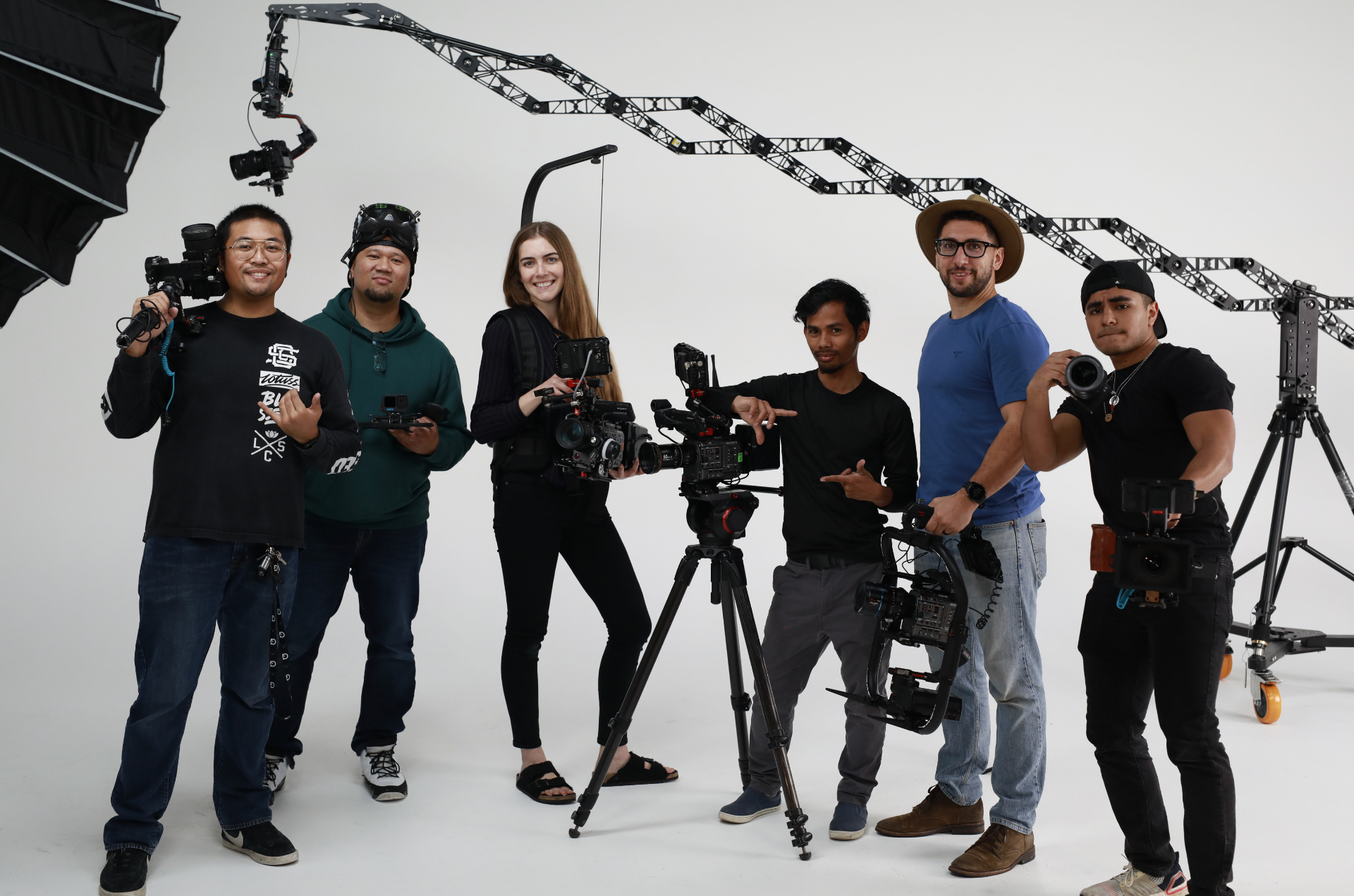
I've filmed for California Transit Works! (CTW), a statewide consortium of transit agencies, unions, and colleges focused on workforce development, through my longtime collaborator Casey Peek — he brings me on to shoot, then edits the footage and manages CTW's site and communications himself. CTW's whole model is built on what they call "High Road" labor-management partnerships: agreements and programs built on mutual trust between the people running transit agencies and the unions representing the people who keep the buses running. That's a very different job on camera than talking to the riding public. The audience is internal — frontline mechanics and operators, agency managers, union leadership, and the educators building the training pipeline — and what I'm there to capture has to hold up for all of them at once.
Clarity across a room that doesn't agree on everything
A CTW video has to make sense to a maintenance technician, a transit agency executive, and a union representative at the same time — three people who don't always trust each other by default, and don't share a vocabulary. On camera, that shapes how I approach an interview: corporate language reads as management spin to a frontline worker, and shop-floor language can read as unserious to leadership, so part of the job is helping a subject talk in their own real words rather than in whichever direction the room's politics might pull them.
Accessibility means respecting people's time and language, not just their eyesight
A lot of the workforce these videos are made for are on their feet all shift, working in a second language, or watching on a break with five minutes and a phone. I keep that in mind on set — favoring the moments and answers that are short, direct, and easy to translate, since that's what Casey has to work with in the edit to make the final piece usable for the people it's actually for.
Accuracy means both sides have to see themselves fairly represented
Because the entire CTW model depends on labor and management trusting each other, footage that even reads as favoring one side over the other undermines the actual thing the partnership is built on. That's part of why I try to give equal weight and equal respect to whoever's in front of the camera, whether it's a technician or an executive — the balance has to be there before it ever reaches Casey's edit and CTW's review.
Grounding the story in the people who do the work
This is the part of CTW's mission that's stated outright: partnerships "centered on the voices of those who do the work." As the person behind the camera, that's mine to protect directly — the strongest footage isn't an executive describing a training program's impact, it's a maintenance tech or a peer mentor describing it themselves, in their own words, while I stay out of the way enough to let that happen.
Why this matters
The work only holds up if the workforce recognizes itself honestly in it. My part of that is showing up on set ready to let people talk in a room with real internal tension, paying attention to how someone actually watches this later (on shift, in a second language, on a break), and trusting that the people closest to the work are the ones who should be telling it — then handing that off to Casey to shape into something CTW can stand behind.
Planning a public-agency or nonprofit video project?
If you're inside a public agency or mission-driven organization and need help translating policy work into something the public can actually understand and act on, that's the kind of project I like to be brought into early — let's talk.